
Increase output · Improve consistency · Reduce repetitive handling01865 416830sales@oxfordindustrialautomation.co.uk
2D and 3D robot vision systems

Find, inspect and pick products with robot vision.

Handle products that arrive in variable positions or orientations with a complete vision-guided robot cell designed around your line, product and required output.

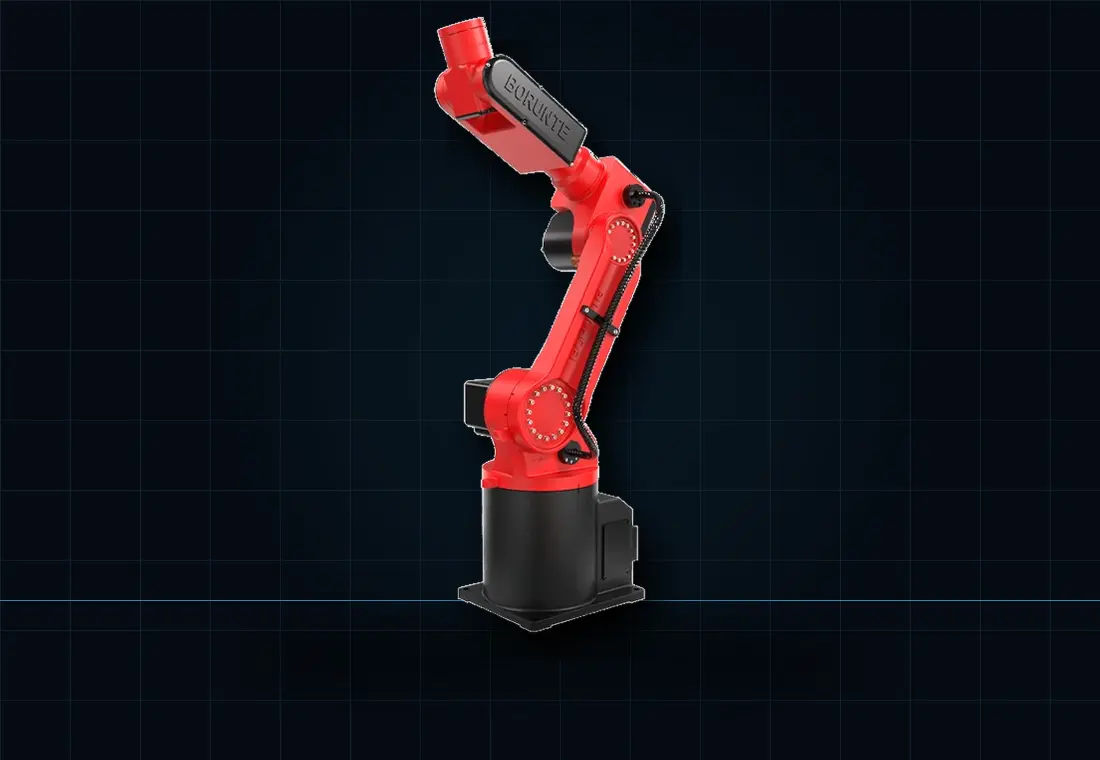
Red articulated robot arm on a black base.
Your production outcome

Give the robot reliable coordinates—not guesswork

A vision-guided pick-and-place system combines controlled lighting, imaging, calibration, robot motion and application-specific tooling so the cell can respond to real product variation.

A fixed sensor is often enough when every part arrives in exactly the same position. Machine vision becomes valuable when products rotate, shift, overlap, vary by type or need inspection before the pick. A camera can locate the product, calculate orientation, identify a variant and pass validated coordinates to the robot controller.

The camera is only one part of the result. Lighting, lens choice, exposure, field of view, part contrast, calibration, processing time and robot accuracy must work together. We define the acceptable presentation window, decision logic and recovery route before selecting hardware.

For products moving on a belt, vision can be combined with encoder-based conveyor tracking. For parts in trays, fixtures or shallow containers, 2D vision may be sufficient. Products with variable height, complex surfaces or unstructured presentation may require 3D data and a more detailed feasibility trial.

Start with your product and target rate

Send product details, variants, current-process photos or video, target output and available space. We will use them to identify the right feasibility work and the simplest reliable cell concept.

Design factors

What determines a reliable result.

These elements are reviewed as one production system so normal variation and fault recovery are designed in from the start.

2D product location

Locate flat or consistently presented products by position and rotation using controlled lighting and a calibrated camera view.

3D position and height

Measure depth where product height, pose or presentation cannot be represented reliably in a single 2D plane.

Conveyor tracking

Combine vision detections with encoder feedback so the robot can intercept products while the line continues moving.

Identification and recipes

Identify product variants, select the correct robot recipe and route each item to the required destination.

Inspection before picking

Check presence, orientation or defined visible features before committing the robot to a pick.

Traceable fault handling

Define what happens to uncertain detections, missed picks, rejected products and lost tracking records.

Project route

From application evidence to a working cell.

Each decision is tied to your products, rate, interfaces and agreed acceptance criteria.

Prove visibility

Test representative good, poor and borderline products under controlled lighting.

Calibrate

Relate camera, robot, tooling and conveyor coordinates using a maintainable method.

Validate the pick

Prove detection, grip, cycle time and recovery over the expected product range.

Hand over

Provide recipes, diagnostics and operator guidance for production use.

Frequently asked questions

Clear answers about vision-guided pick and place.

These answers are general guidance. Final selection and performance are confirmed against your application.

Does every pick-and-place robot need machine vision?

No. Fixed sensors or known coordinates can be simpler when every product arrives in a repeatable position. Vision is useful when the cell must measure location, orientation, identity, height or a visible quality feature.

Should I use 2D or 3D robot vision?

2D vision often suits products on a consistent plane, trays and conveyor applications. 3D vision is considered when height, depth, complex pose, stacking or unstructured presentation affects the pick. Representative product trials determine the reliable option.

Can vision-guided robots pick from a moving conveyor?

Yes. Camera detections can be combined with encoder feedback and robot conveyor tracking. The design must control latency, calibration, belt slip, lighting, product movement and the available pick window.

Can the camera inspect products as well as locate them?

It can check defined visible features when the image resolution, lighting and cycle time are suitable. The acceptance criteria and handling of uncertain or failed inspections must be agreed and validated.

See what will work on your production line.

Send your product details, target output, photos or a short process video. We will recommend the right next step and explain what is needed for a reliable robot cell.

Get a recommendation →
Call 01865 416830Get a recommendation →