
Increase output · Improve consistency · Reduce repetitive handling01865 416830sales@oxfordindustrialautomation.co.uk
Budgeting a complete robot cell

Understand pick-and-place robot cost and payback.

Build a useful automation budget by costing the complete working cell—not only the robot arm—and comparing it with your current production process.

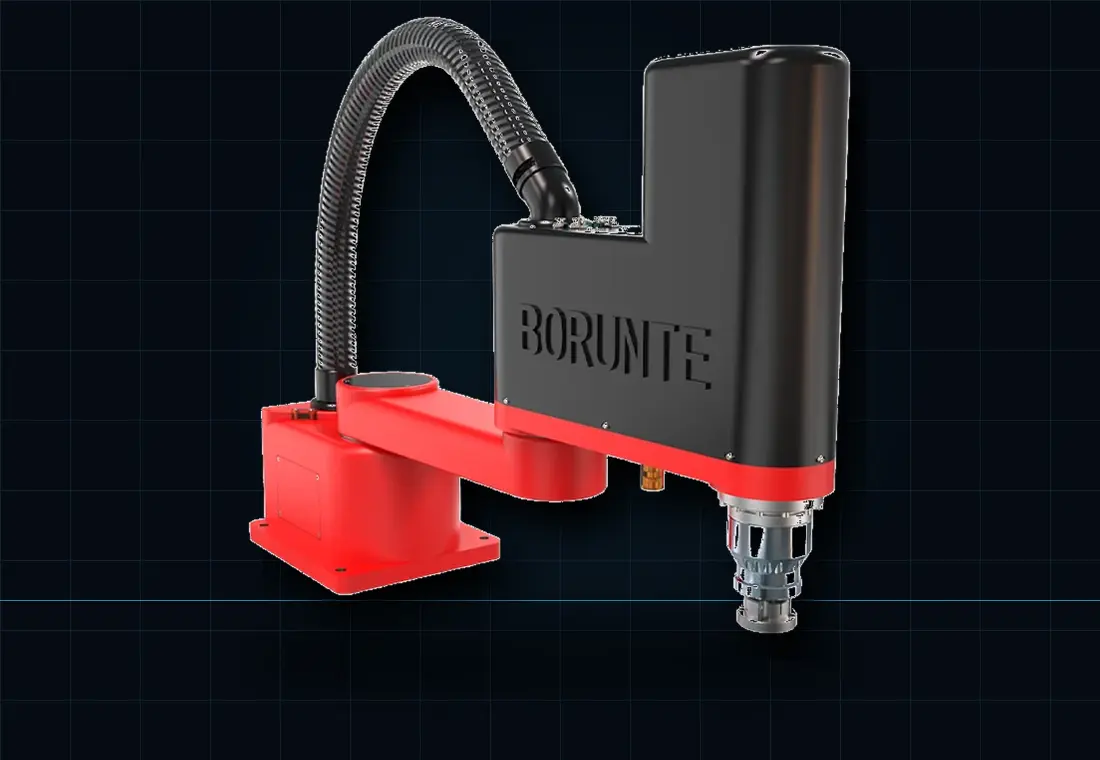
Red and black SCARA robot with an overhead cable conduit.
A useful business case

Compare the installed system with the cost of today’s process

There is no responsible single price for every pick-and-place application. The arm may be only one part of the installed cell, and two similar-looking tasks can require very different presentation, tooling, safety and integration work.

A practical budget can include the robot, controller, base, gripper, product infeed, conveyors or feeders, sensing or vision, guarding, PLC and HMI, electrical hardware, software, testing, documentation, installation and commissioning. Existing equipment condition, site interfaces and shutdown constraints also affect the final scope.

Payback should be based on measurable changes: operating hours, redeployable labour, additional saleable output, reduced scrap or damage, improved consistency, changeover time, maintenance and expected availability. A fast arm does not create value if products are not presented reliably or the downstream machine is already the constraint.

The quickest route to a useful budget is to share product samples or dimensions, target throughput, a short video of the current process, available space, product variants and the upstream and downstream equipment. That lets the concept focus on the actual production bottleneck.

Start with your product and target rate

Send product details, variants, current-process photos or video, target output and available space. We will use them to identify the right feasibility work and the simplest reliable cell concept.

Design factors

What determines a reliable result.

These elements are reviewed as one production system so normal variation and fault recovery are designed in from the start.

Robot and motion

Robot type, reach, payload, quantity, mounting and controller features required for the full cycle.

Product presentation

Conveyors, feeders, trays, separation, accumulation and the handling needed before a reliable pick.

End-of-arm tooling

Product-specific grippers, sensors, vacuum equipment, tool change and safe failure requirements.

Vision and controls

Cameras, lighting, PLC, HMI, recipes, tracking, inspection and interfaces to existing equipment.

Safety and access

Risk reduction, guarding, scanners, interlocks, operator loading and maintenance clearance.

Delivery and handover

Design, build, trials, documentation, installation, commissioning, training and production support.

Project route

From application evidence to a working cell.

Each decision is tied to your products, rate, interfaces and agreed acceptance criteria.

Define the baseline

Record current labour, output, losses, quality, operating hours and constraints.

Scope the whole cell

Include presentation, tooling, controls, safety, integration and site work.

Model the return

Compare realistic output, redeployment, savings, maintenance and availability.

Prove the assumptions

Validate grip, cycle and recovery before committing to final performance targets.

Frequently asked questions

Clear answers about robot cost and ROI.

These answers are general guidance. Final selection and performance are confirmed against your application.

How much does a pick-and-place robot system cost in the UK?

The price is application-specific because the complete cell can include product presentation, tooling, vision, guarding, controls and installation as well as the robot. Product details, target rate and layout are needed before a useful budget can be provided.

Is the robot arm the largest part of the project cost?

Not always. Tooling, feeders, conveyors, vision, guarding, controls, engineering, testing and site integration can equal or exceed the arm cost in a complex application. The complete installed scope is the useful comparison.

How do I calculate robot cell payback?

Compare the installed and ongoing costs with measurable benefits such as redeployable labour, additional output, reduced scrap or damage, improved consistency and operating hours. Include availability, maintenance and changeover effects.

What should I send to get a robot quotation?

Send product dimensions and mass, variants, target output, current-process photos or video, available layout, upstream and downstream interfaces, shift pattern and any hygiene, quality or safety constraints.

See what will work on your production line.

Send your product details, target output, photos or a short process video. We will recommend the right next step and explain what is needed for a reliable robot cell.

Get a recommendation →
Call 01865 416830Get a recommendation →