
Increase output · Improve consistency · Reduce repetitive handling01865 416830sales@oxfordindustrialautomation.co.uk
Robot loading for packaging lines

Load trays and packaging machines at production speed.

Orient, collate and place products into trays, cartons, cases, thermoformers or moving packaging-machine infeeds with a robot cell designed around your real line rate.

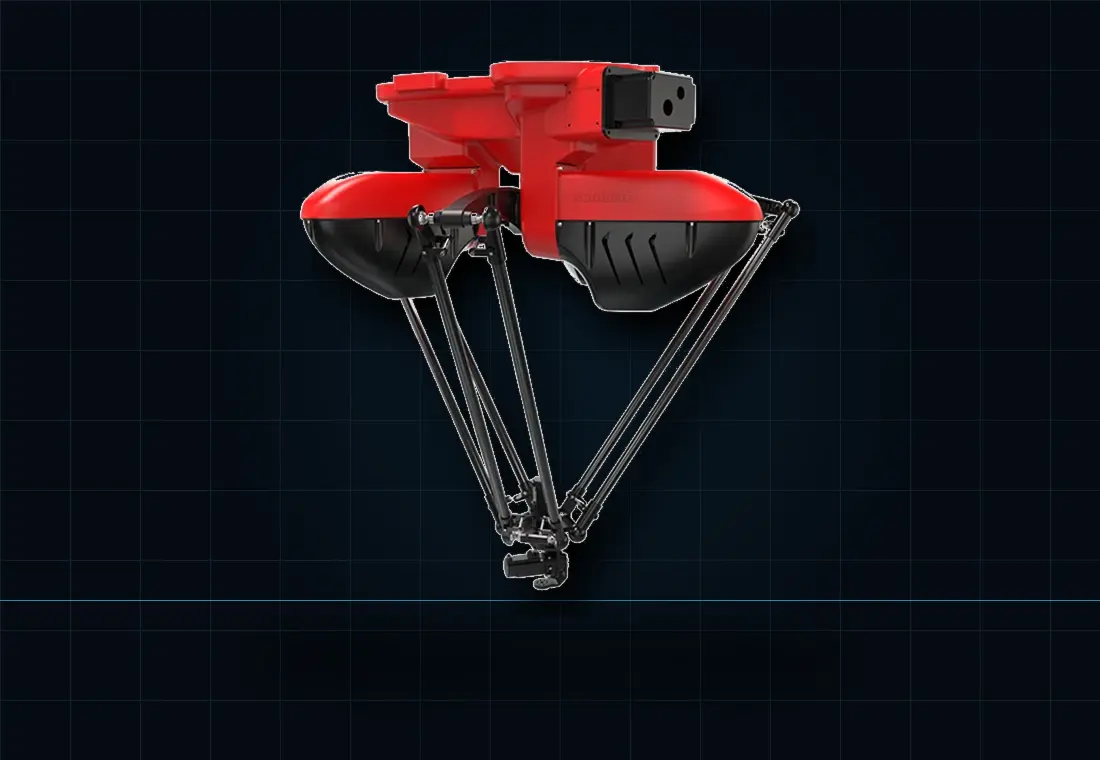
Red delta robot with parallel linkages against a dark grid background.
Answer first

What is a robotic tray loading and packaging infeed system?

It is a complete pick-and-place cell that receives products, establishes their position and orientation, grips them and loads them into the next pack or packaging process in the required pattern and timing.

The destination may be a tray, carton, case, thermoformer pocket, blister, flow-wrapper chain or cartoner infeed. Products may arrive in a fixed lane, at variable spacing or randomly oriented on a conveyor. Sensors or machine vision locate each item; encoder tracking and line signals keep the robot coordinated with moving equipment.

The objective is not simply a fast robot movement. Reliable output depends on product presentation, the available pick and placement windows, grip and release control, pack pattern, upstream variation and downstream availability. The cell also needs a defined response to missing products, blocked destinations, rejects, wrapper stops and restarts.

Oxford Industrial Automation designs the complete application around your products and existing equipment, including conveyors, vision, tooling, controls, guarding, testing and commissioning. This lets you assess one production system rather than trying to join unrelated components on site.

Start with representative products and packaging

Send product and pack dimensions, current-process video, target output, format range, packaging-machine details and an available layout. We can identify the most useful feasibility work and the simplest reliable loading concept.

Design factors

Build a loading cell around the whole packaging cycle.

These factors determine whether the system maintains output through normal production variation—not only during a short demonstration.

Product presentation

Define lanes, spacing, orientation, overlaps, accumulation and the usable pick window before choosing a robot.

Pack pattern and pitch

Control the destination position, layer, rotation, count and timing for trays, cases or moving machine flights.

Grip and release

Select vacuum, finger, soft or multi-pick tooling that protects the product and releases it cleanly at speed.

Line balance

Match robot quantity, buffer capacity and cycle strategy to both product arrival and downstream machine demand.

Hygiene and access

Set materials, ingress protection, cleanability, guarding and operator access from the real site requirements.

Stops and recovery

Define what happens to tracked products, open packs and robot queues after a reject, blockage, stop or restart.

Control sequence

A coordinated route from product arrival to confirmed placement.

The exact sequence is application-specific, but each stage needs a valid condition, controlled action and fault response.

Present

Separate, space or accumulate products so a usable pick opportunity reaches the robot.

Locate

Use sensing or vision to create the product position, orientation and destination instruction.

Pick and arrange

Grip one or several products and build the required pitch, orientation, collation or layer.

Load and confirm

Place into the valid destination, verify the result and update both machines before the next cycle.

Frequently asked questions

Answers about robotic tray loading.

Use these answers as a starting point; representative products and the real packaging-machine interface determine the final solution.

What can a robotic tray loading system load?

Depending on the product and tooling, a robot can load items into trays, cartons, cases, thermoformer pockets, blister packs or the pitched infeed of a flow wrapper or cartoner. Representative products and packaging are used to confirm the handling method.

Can a robot be added to an existing packaging machine?

Often, subject to an interface and layout review. The project must define product handoff, line speed, control signals, stopping behaviour, guarding, access and how the existing machine handles gaps, rejects and restarts.

How does a robot match a continuously moving wrapper or cartoner?

Encoder feedback, product detection and the packaging machine's timing or virtual pitch can be combined so the robot places each product into a valid moving target. The usable placement window and fault recovery must be proved at the required rate.

Can one tray loading cell handle different pack formats?

Often, using recipes, adjustable guides, interchangeable or automatic-change tooling and verified format parts. The product range, changeover time and safeguards against the wrong recipe or tooling must be included in the design.

See how your products can reach the pack automatically.

Send your products, pack formats, target rate and a short video of the current loading task. We will recommend the right next step for a reliable integrated cell.

Review your application →
Call 01865 416830Get a recommendation →