
Increase output · Improve consistency · Reduce repetitive handling 01865 416830sales@oxfordindustrialautomation.co.uk
Flexible articulated automation

Six-axis robots for complex product movement.

Reach around fixtures, change product orientation and connect multiple operations with a single flexible robot architecture.

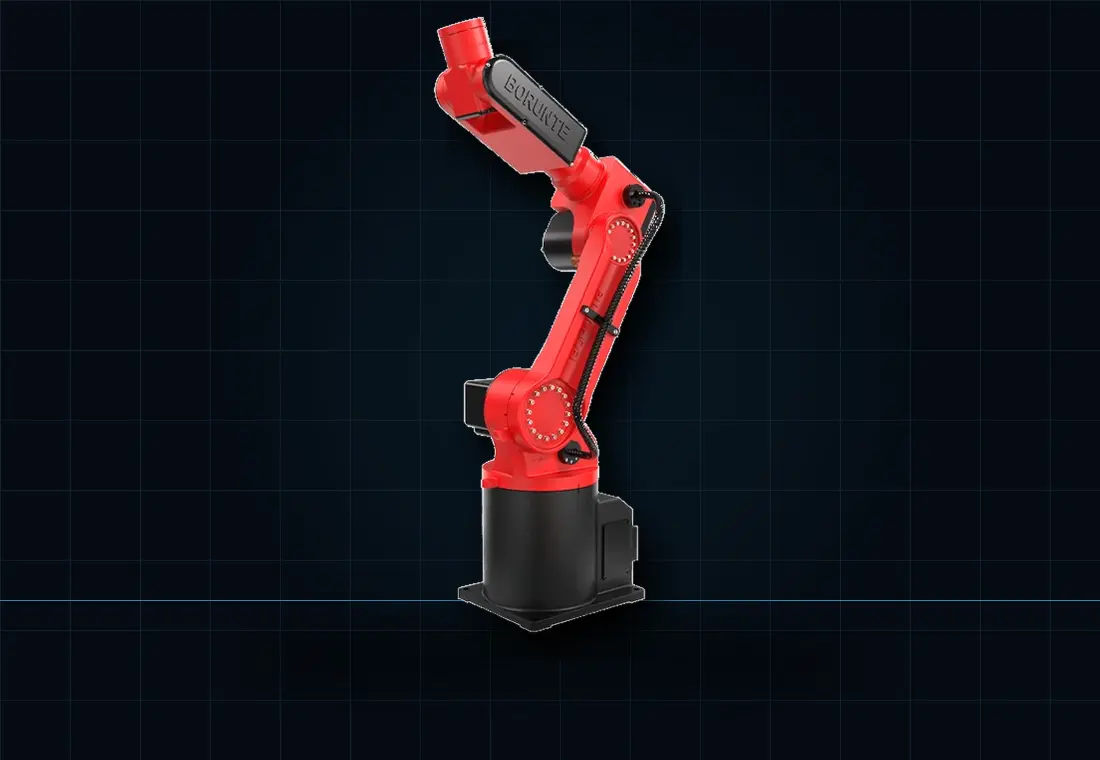
Red articulated robot arm on a black base.
990 mmExample reach
5 kgExample payload
±0.05 mmExample repeatability
Application fit

Motion freedom for demanding layouts

Six-axis robots provide independent rotation at each joint, allowing the tool to approach a product from different angles and maintain or change its orientation throughout the path.

This flexibility suits loading machines with restricted access, transferring parts between several stations, presenting products to inspection, placing components into angled fixtures and handling tasks that include flipping or reorientation. Robot mounting may be floor, wall, shelf or overhead where the selected platform and cell design support it.

Reach and payload are checked at every critical pose. A robot may have sufficient headline reach but poor joint posture, reduced payload capacity or limited wrist freedom at the actual pick location. Offline layout checks, path review and tooling design help protect access, cycle time and cable life.

When parts arrive loose in containers, see the feasibility factors behind 3D vision-guided robotic bin picking.

One complete system, ready for your line

You receive one complete system covering product presentation, end-of-arm tooling, sensing, controls, safeguarding and operator access. The cell is proved against your real production task, not selected from a headline robot specification.

What determines success

What defines a reliable production cycle.

The robot is selected after the complete moving payload, work envelope, presentation and interfaces are understood.

Reach & posture

Every pick, transfer and place pose is checked for joint limits, wrist orientation and clearance.

Payload & inertia

Tool centre of gravity and moment of inertia are assessed as well as total mass.

Path clearance

Fixtures, guards, machines and cable dress are included when programming collision-free paths.

Mounting strategy

Floor, wall, shelf or overhead mounting can change access, footprint and maintainability.

Integrated cell scope

Everything needed to make the robot work in production.

Your cell can include every element needed to achieve the required output and connect reliably with the rest of your line.

01

Multi-station fixtures and machine interfaces

02

Automatic tool changing for product families

03

2D or 3D vision for flexible picking

04

Servo positioners, indexing tables and external axes

05

Cell guarding, interlocks and safe recovery

Frequently asked questions

Questions about six-axis pick-and-place robots.

Use these answers to compare options; your product, rate and production conditions determine the final recommendation.

Why choose a six-axis robot for pick and place?

Six-axis robots provide the greatest orientation freedom and can reach around fixtures or between several stations. They suit tasks that need more than simple horizontal and vertical transfer.

Can one six-axis robot serve multiple machines?

Yes, where reach, cycle time, access and machine availability support it. A linear track or other external axis can sometimes extend the work envelope.

Can the robot flip or rotate products during transfer?

Yes. The wrist axes can reorient the product, subject to payload, centre of gravity, tooling grip and path constraints.

How is collision risk controlled?

The cell is designed with clearance, motion limits, fixtures and safe zones. Paths are programmed and tested, and recovery routines are defined for expected faults.

See what will work on your production line.

Send your product details, target output, photos or a short process video. We will recommend the right next step and explain what is needed for a reliable robot cell.

Get a recommendation →
Call 01865 416830Get a recommendation →