What does the system do?
A complete cell detects, grips, moves, reorients and places your product, with the tooling, controls and safety measures needed to run on your line.

Straight answers on robot types, costs, speeds, conveyor tracking, grippers, safety, payback and what to send for a useful recommendation.
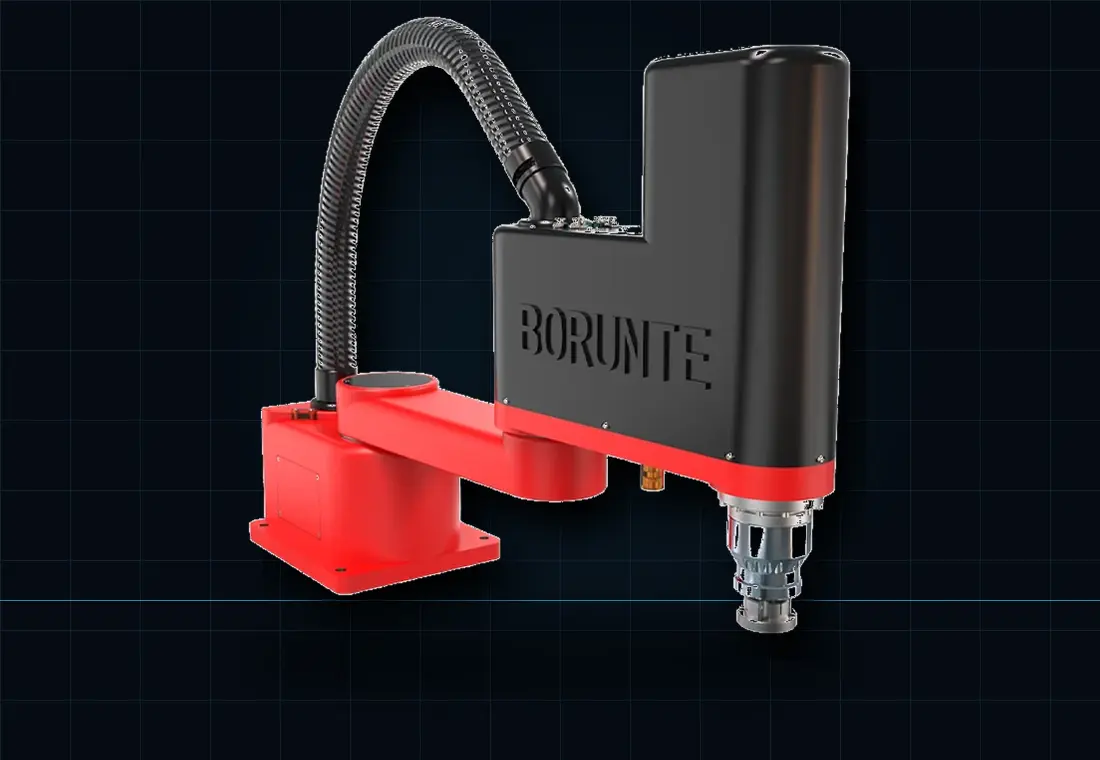
These four points answer the questions that usually come before robot selection.
A complete cell detects, grips, moves, reorients and places your product, with the tooling, controls and safety measures needed to run on your line.
SCARA, delta, collaborative and six-axis robots suit different rates, movements and spaces. Your product and target output decide the best fit.
Usually, yes. The review covers available space, conveyors, machine signals, safe access, shutdown time and how products enter and leave the cell.
Cost depends on the complete scope—not only the arm. Product details, rate and layout are needed before a useful budget can be given.
Each answer starts with the practical point, then explains what changes with your product, rate and production environment.
It depends on the required rate, payload, reach, orientation changes and available space. SCARA robots suit fast planar movement, delta robots suit very high-speed lightweight handling, cobots suit appropriate flexible applications, and six-axis robots provide the greatest motion freedom.
Yes. An encoder, suitable sensing and the robot controller can be combined for conveyor tracking. Vision may also be used to locate products, identify their orientation and supply pick coordinates.
Yes. End-of-arm tooling is engineered around the product, required grip, cycle, surfaces, presentation and failure modes. Options can include vacuum, parallel grippers, adaptive fingers, magnetic tooling and multi-pick heads.
Often, yes. The changeover strategy might use recipe selection, adjustable tooling, automatic tool changing or interchangeable format parts. The right approach depends on product variation and the time available for changeovers.
Product dimensions and weight, target throughput, current process video, available space, upstream and downstream equipment, product formats and any hygiene, environmental or safety constraints are useful starting points.
Oxford Industrial Automation can engineer the complete application, including robot selection, tooling, sensing, controls, guarding, integration, installation, commissioning and training.
A SCARA suits compact planar movement, fixed stations and accurate placement. A delta robot is commonly used for high-speed lightweight picking over a conveyor. The decision uses rate, motion, reach, orientation and presentation requirements.
The product, gripper, adapters, sensors, cable or hose effects and any other moving hardware are included. Centre of gravity and inertia may also limit the usable payload.
Yes. Recipe changes, adjustable guides, interchangeable fingers, quick-change tools, automatic tool changing and vision can support variants. Changeover time and error-proofing should be designed into the cell.
Yes, subject to an interface review. We define mechanical handoff, electrical signals, control ownership, timing, fault behaviour and safe access between the new cell and existing equipment.
The footprint depends on robot work envelope, product infeed and outfeed, guarding, doors, operator access and maintenance clearance. A layout review is needed before confirming space.
Robot repeatability, tool deflection, product and fixture tolerances, calibration, sensing, speed, payload and environmental conditions all affect the final result.
Representative product trials can be used to validate grip, release, marking, sensing, presentation and cycle assumptions before the final design is confirmed.
Applications can span food and drink, packaging, plastics, automotive components, electronics, chemicals, consumer goods, logistics and general manufacturing, subject to product and environmental requirements.
A pick-and-place robot system is a complete automation cell that detects a product, grips it, moves or reorients it and places it into the next process. The working system can include the robot, product presentation, end-of-arm tooling, sensing or vision, controls, guarding and operator interfaces.
Cost is application-specific. The main factors are product variation, required output, robot type and quantity, gripper design, feeders or conveyors, vision, guarding, controls and installation work. An initial application review is needed before a useful budget or quotation can be provided.
The achievable rate depends on travel distance, product stability, grip and release time, payload, orientation changes, inspection steps and conveyor presentation. Delta and SCARA robots often suit the highest rates, but the complete cycle should be modelled and proved with representative products.
Payback is influenced by the installed system cost, operating hours, labour that can be redeployed, increased output, reduced product damage or scrap, uptime, changeover time, maintenance and the value of improved production consistency. These factors should be assessed against the current process.
Timescales vary with cell complexity, component lead times, product trials, design approval, build, software, site preparation and acceptance testing. A realistic programme can be provided after the product, target rate, interfaces and scope have been reviewed.
Not always. Fixed sensors may be enough when products arrive in a repeatable position and orientation. Vision is useful when location, orientation, identity, quality or product variation must be measured before the pick.
Yes, subject to an interface and layout review. The design must account for mechanical handoff, electrical signals, control ownership, timing, fault behaviour, guarding, access and the available production shutdown window.
The complete application needs a risk assessment. Guarding or other protective measures depend on the robot, speed, payload, gripper, product, fixtures, operator access and surrounding machinery. Choosing a collaborative robot does not automatically remove the need for guarding.
Vision-guided robotic picking uses a camera and calibrated coordinates to locate, identify or orient a product before the robot picks it. It is useful when products do not arrive in one fixed position.
3D vision is considered when product height, depth, stacking or complex pose affects the pick. A 2D camera may be simpler for products that remain on one controlled plane.
Potentially, using 3D vision, suitable tooling and collision-aware robot paths. Tangling, surface properties, bin depth and grip access must be tested with representative parts.
Yes. The cell must be designed around product fragility, target rate, packaging format, hygiene zone, cleaning method, materials, tooling and line interfaces.
A useful proposal should define products, rate, layout, tooling, interfaces, operator tasks, safety approach, testing, documentation, installation scope, assumptions and exclusions.
Different product presentation, grippers, vision, guarding, controls, line interfaces, testing and site work can make the complete installed scope very different even when the robot arms look similar.
Send your product details, target output, photos or a short process video. We will recommend the right next step and explain what is needed for a reliable robot cell.