
Increase output · Improve consistency · Reduce repetitive handling 01865 416830sales@oxfordindustrialautomation.co.uk
Robotic assembly automation

Place components with repeatable control.

Pick, present, insert and verify components using robot motion, purpose-designed fixtures, sensing and process control.

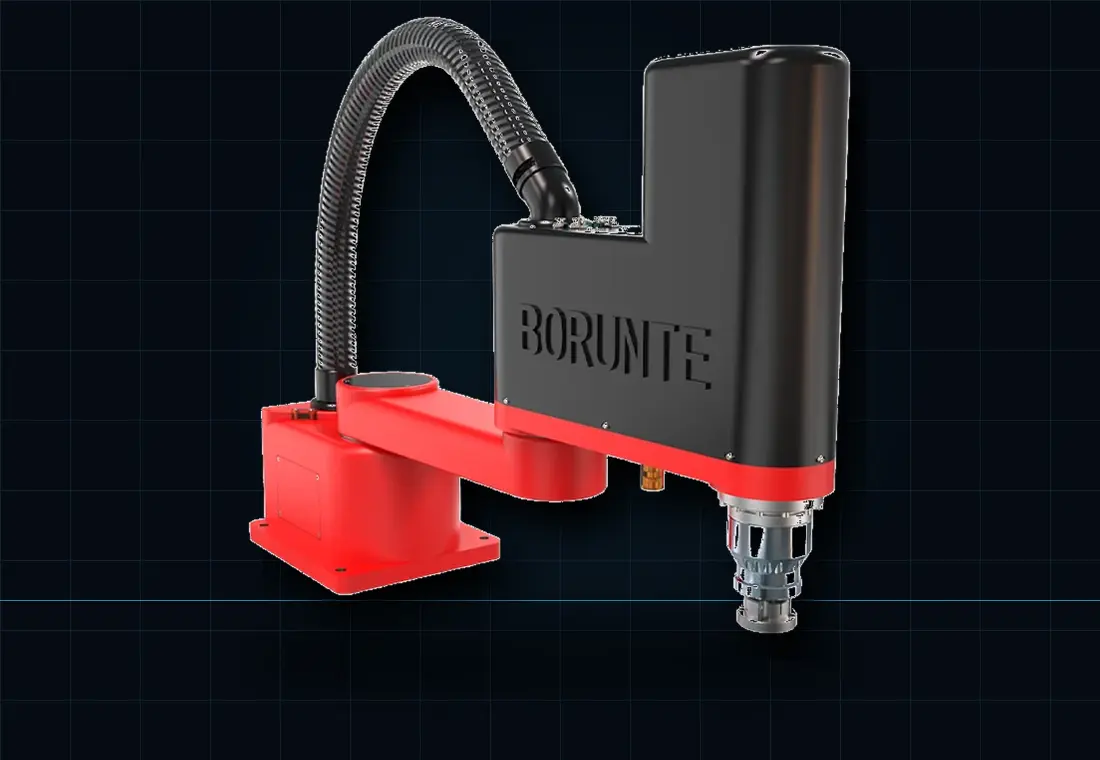
Red and black SCARA robot with an overhead cable conduit.
Your production outcome

Accuracy belongs to the whole process

Robot repeatability is not the same as finished assembly accuracy. Product tolerances, location method, fixture design, gripper compliance and sensing all influence the final placement.

Applications can include loading components into nests, placing parts onto moving or indexed products, inserting clips or seals, orienting subassemblies, kitting parts and transferring items between manual and automatic stations. SCARA and six-axis robots are common choices, with cobots considered where the rate and risk assessment support the application.

We define how each component arrives, how it is located, what confirms correct pick and placement, and how faults are contained. Where insertion forces or fine alignment matter, the design can include compliance devices, force sensing, vision correction, datum features or verification after assembly.

The right robot follows your needs

You do not need to choose the robot first. Your product, target rate, movements, access and existing equipment determine whether SCARA, delta, collaborative or six-axis technology will give you the best result, together with the tooling, controls and safeguarding needed for production.

Design factors

Control the variables that define real output.

These elements are reviewed together so the cell can handle normal production variation and recover predictably.

Part location

Use nests, tooling datums or vision to establish a repeatable reference.

Insertion strategy

Control approach, compliance, force and speed to avoid damage or partial assembly.

Presence checks

Confirm component pick, orientation and final location at the right process stage.

Fixtures

Support the product and resist process loads without hiding critical access.

Traceability

Record recipe, inspection or process results where the application requires it.

Changeover

Design recipes and tooling around the real range of components and production batches.

Control sequence

A coordinated route from arrival to placement.

The exact sequence is application-specific, but every stage needs a defined condition, action and fault response.

Present

Feed or locate each component in a controlled pose.

Pick

Grip with confirmation that the correct part is retained.

Place

Move through a clear path and control insertion or release.

Verify

Check the completed placement and route faults appropriately.

Frequently asked questions

Questions about robotic component placement and assembly.

Use these answers as a starting point; your products and real production conditions determine the final solution.

Can a robot place very small components?

Yes, subject to presentation, tooling, visibility and required tolerance. Small-part applications often depend on feeder and fixture design as much as robot repeatability.

How is insertion force controlled?

Options include compliant tooling, force or torque sensing, controlled motion, mechanical stops and process-specific feedback.

Can the cell check that a component is present?

Yes. Sensors or vision can confirm pick, orientation and final placement. The required evidence and reaction to a failed check are defined with the process.

Can the same robot assemble several variants?

Often, yes. Recipes, flexible feeding, vision, interchangeable tooling and fixture change parts can support product families, subject to the range of variation and changeover time.

See what will work on your production line.

Send your product details, target output, photos or a short process video. We will recommend the right next step and explain what is needed for a reliable robot cell.

Get a recommendation →
Call 01865 416830Get a recommendation →