
Increase output · Improve consistency · Reduce repetitive handling 01865 416830sales@oxfordindustrialautomation.co.uk
Grippers engineered around the product

The robot is only as capable as the tool.

Design vacuum, finger, magnetic, adaptive or multi-pick tooling around the product, cycle, environment and required changeover strategy.

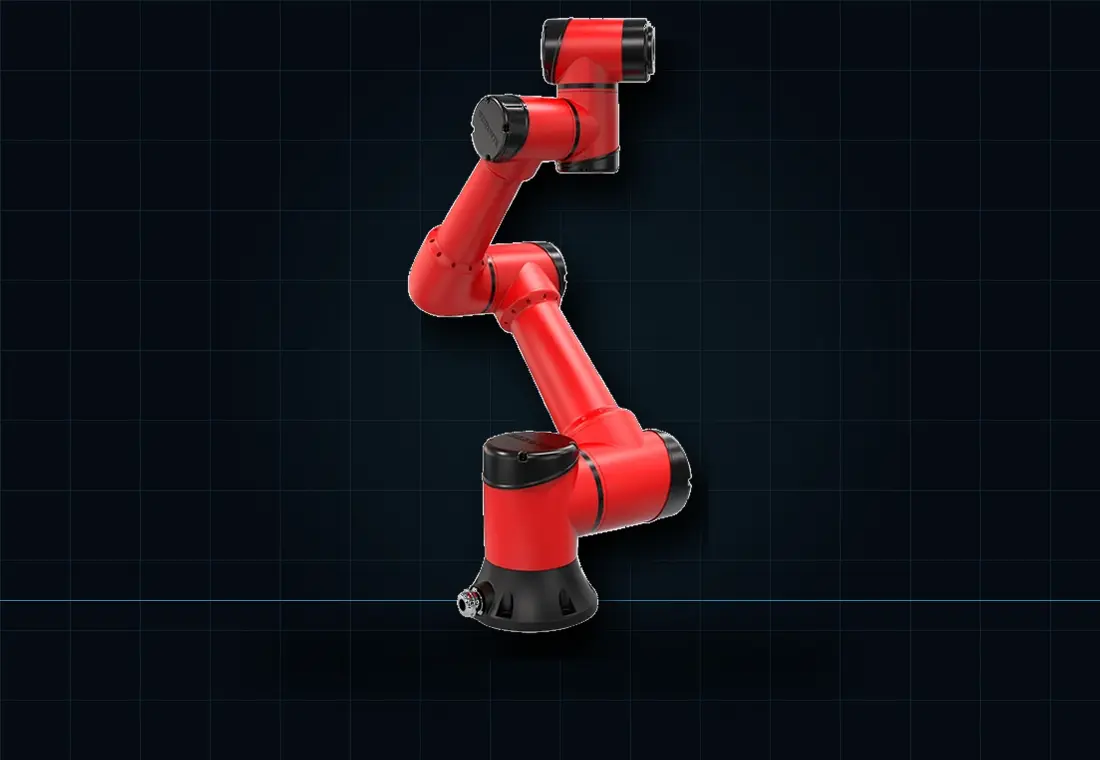
Red robot arm with black joint covers against a dark grid background.
Your production outcome

Grip the product, not the specification sheet

End-of-arm tooling determines whether the robot can pick reliably, accelerate safely, control orientation and release cleanly. It is engineered around the real product and the conditions in which it must operate.

Vacuum tooling can handle boxes, trays, bags, sheets and many smooth products. Parallel or angular grippers suit components with defined grip features. Magnetic tooling can support suitable ferrous parts, while adaptive fingers and compliant elements can accommodate controlled variation. Multi-pick heads can increase throughput when the process and robot payload support them.

We include tool mass, centre of gravity, inertia, air consumption, cable and hose routing, collision risk, product contact materials, retained energy and safe failure behaviour. Sensors can confirm vacuum, jaw position, product presence, tool identity and successful release.

The right robot follows your needs

You do not need to choose the robot first. Your product, target rate, movements, access and existing equipment determine whether SCARA, delta, collaborative or six-axis technology will give you the best result, together with the tooling, controls and safeguarding needed for production.

Design factors

Control the variables that define real output.

These elements are reviewed together so the cell can handle normal production variation and recover predictably.

Vacuum

Select cup geometry, material, circuit zoning and vacuum generation for the product and surface.

Mechanical grip

Use fingers and locating features that control the part without damage or ambiguity.

Compliance

Allow controlled alignment where product, fixture or presentation tolerances require it.

Sensing

Confirm product presence, vacuum level, jaw position or tool identity within the cycle.

Tool change

Use manual quick-change or automatic tool changing when product families require different gripping methods.

Safe failure

Consider what happens to the product during loss of air, power or robot motion.

Control sequence

A coordinated route from arrival to placement.

The exact sequence is application-specific, but every stage needs a defined condition, action and fault response.

Sample

Review real products, variation, surfaces and acceptable contact areas.

Concept

Select the grip principle, contact geometry, sensing and services.

Trial

Test retention, release, marking and cycle behaviour with representative products.

Integrate

Manage payload, dress pack, utilities, maintenance access and spare wear parts.

Frequently asked questions

Questions about robot end-of-arm tooling.

Use these answers as a starting point; your products and real production conditions determine the final solution.

Which gripper is best for pick and place?

The best gripper depends on product geometry, material, surface, porosity, mass, acceleration, orientation and environment. Product trials are often the most reliable way to confirm the concept.

Can one gripper handle different products?

Sometimes. Adjustable, adaptive or zoned tooling can cover a product family. Larger differences may require quick-change fingers, interchangeable tools or automatic tool changing.

How do you confirm a product has been picked?

Vacuum switches, jaw-position sensors, optical sensors, proximity sensors or vision can be used, depending on product and tool design.

What happens if air pressure is lost?

The risk assessment and tooling design define the safe response. Options can include non-return valves, reservoirs, mechanical retention, pressure monitoring and controlled stopping.

See what will work on your production line.

Send your product details, target output, photos or a short process video. We will recommend the right next step and explain what is needed for a reliable robot cell.

Get a recommendation →
Call 01865 416830Get a recommendation →