
Increase output · Improve consistency · Reduce repetitive handling01865 416830sales@oxfordindustrialautomation.co.uk
Food, packing and primary product handling

Handle and pack food products at production speed.

Increase packing output and consistency with a robot cell designed around your food product, packaging format, hygiene regime and live production flow.

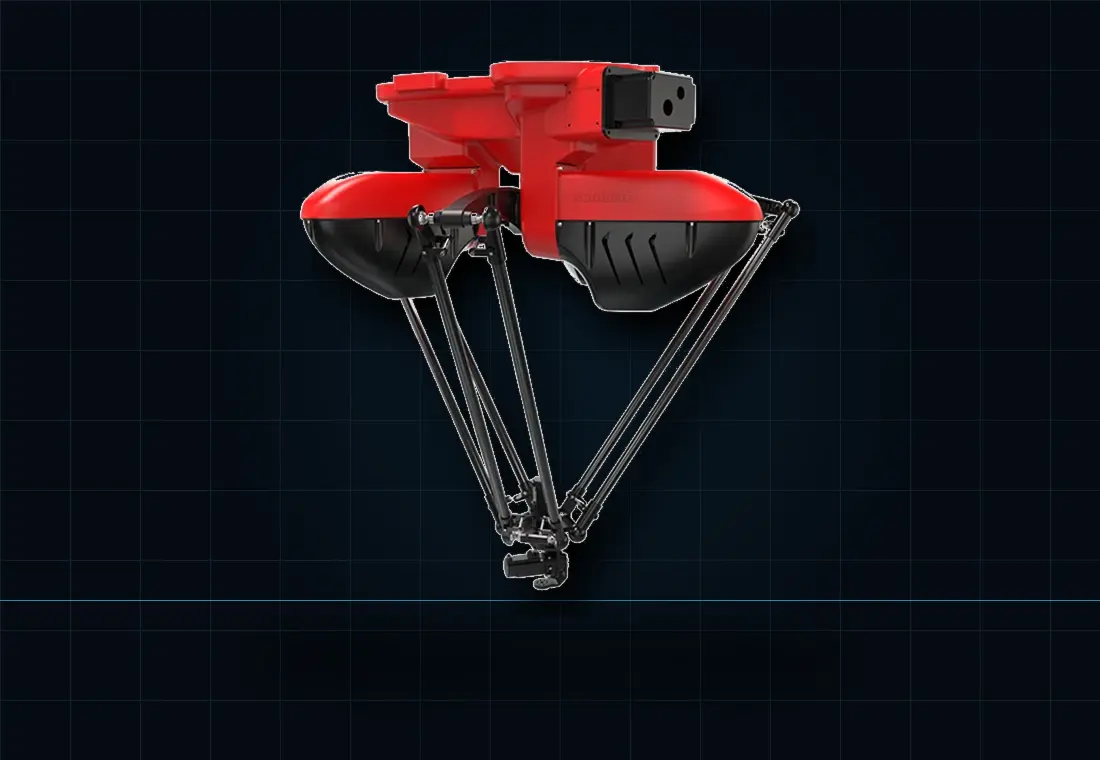
Red delta robot with parallel linkages against a dark grid background.
Your production outcome

Protect the product while keeping the line moving

Food and packaging automation must balance speed with gentle handling, cleanability, product variation and reliable recovery when normal line conditions change.

Typical applications include loading products into trays, cartons or flow wrappers; collating packs; orienting items; sorting by recipe; and transferring products between conveyors. Delta robots often suit high-speed lightweight handling, while SCARA or six-axis robots can suit compact placement, larger packs or more complex orientation changes.

The gripper is designed around the product surface, porosity, temperature, fragility and allowable contact. Vacuum can be effective for many packs, while soft, finger or custom tooling may be needed for delicate or irregular products. Tool materials, retained product, cleaning access and contamination risks are reviewed as part of the cell—not after it.

The final hygienic design depends on where the cell sits in the process and your site requirements. Equipment zones, materials, ingress protection, cleaning chemicals, washdown method, food-contact obligations and allergen or changeover procedures must be specified before hardware is selected.

Start with your product and target rate

Send product details, variants, current-process photos or video, target output and available space. We will use them to identify the right feasibility work and the simplest reliable cell concept.

Design factors

What determines a reliable result.

These elements are reviewed as one production system so normal variation and fault recovery are designed in from the start.

Pack loading

Place products into trays, cartons, pockets or infeed flights with controlled orientation and spacing.

High-speed sorting

Use delta robots and vision where lightweight products arrive randomly on a moving belt.

Gentle handling

Control grip force, acceleration and release to reduce marking, deformation and dropped product.

Recipe changeovers

Support product and pack variants with recipes, adjustable guides and suitable tooling changes.

Hygiene by design

Match materials, access, guarding and equipment protection to the defined production and cleaning zone.

Line integration

Coordinate upstream product flow, packaging equipment, rejects, starved states and downstream availability.

Project route

From application evidence to a working cell.

Each decision is tied to your products, rate, interfaces and agreed acceptance criteria.

Share products and packs

Provide samples, variants, target rate, current losses and packaging details.

Define the environment

Agree food-contact, cleaning, temperature, moisture and site hygiene requirements.

Prove handling

Test grip, release, marking, orientation and cycle time with representative products.

Integrate production

Install controls, safety, line interfaces, recipes and recovery guidance.

Frequently asked questions

Clear answers about food and packaging robots.

These answers are general guidance. Final selection and performance are confirmed against your application.

Which robot is best for food pick and place?

Delta robots commonly suit very high-speed lightweight conveyor picking. SCARA and six-axis robots may suit compact placement, heavier packs or complex movements. Product, rate, reach, hygiene and layout decide the best fit.

Can a robot handle delicate or irregular food products?

Potentially, yes. Success depends on stable product presentation and tooling that controls grip force, acceleration and release without unacceptable marking or deformation. Representative product trials are recommended.

Does a food pick-and-place cell need to be washdown rated?

That depends on its process zone and cleaning regime. The required materials, ingress protection, drainage, access and chemical resistance must be specified from the site hygiene assessment before equipment selection.

Can the same cell handle different pack sizes?

Often, using recipes, adjustable guides, interchangeable or automatic-change tooling and vision. The product range, changeover time and risk of selecting the wrong format must be considered in the design.

See what will work on your production line.

Send your product details, target output, photos or a short process video. We will recommend the right next step and explain what is needed for a reliable robot cell.

Get a recommendation →
Call 01865 416830Get a recommendation →